


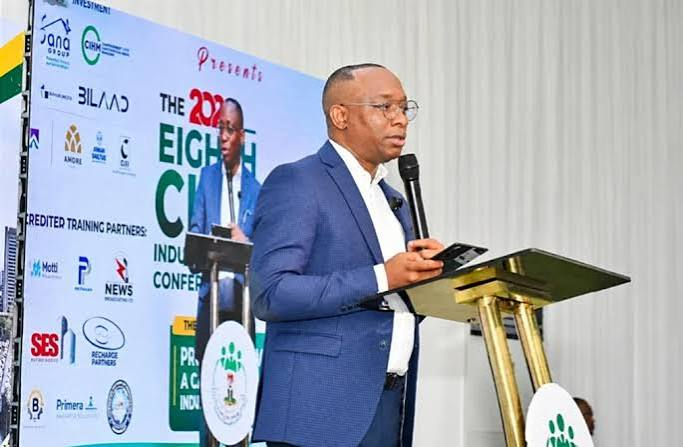
The Bureau of Public Procurement (BPP) has urged procurement and project management professionals to collaborate more closely to accelerate Nigeria’s industrial transformation, improve infrastructure delivery, and ensure value for public spending.

Dr Adebowale Adedokun, Director-General of BPP, made this call in a statement issued by Ijeoma Chijoke-Adindu, Head of Information and Public Relations, in Abuja. Adedokun spoke at the International Project Management Day programme and the induction ceremony of the Chartered Institute of Project Managers of Nigeria (CIPMN) on Thursday.
The programme had the theme: “Project Management: A Catalyst for Nigeria’s Industrial Transformation”.
Adedokun said effective procurement and professional project management are essential to translate government policies and investments into tangible development outcomes.
He explained that procurement ensures the selection of competent service providers and clear contractual obligations, while project management coordinates resources, timelines, personnel, and risks for successful project execution.
AdedokunAdedokun emphasized that public project success should be measured not only by contracts awarded, but by the delivery of functional infrastructure, quality services, and sustainable benefits to citizens. P boss said the bureau’s reform agenda, through initiatives such as the Nigeria First Policy, Sector-Based Procurement Frameworks and measures to broaden supplier participation, was designed to strengthen domestic production.
He added that these reforms will also strengthen local supply chains and create more opportunities for Nigerian enterprises.
He also highlighted the recent launch of the MSMEs Public Procurement Training Programme and Digital Learning Portal, supported by the World Bank under the Sustainable Procurement, Environmental and Social Standards Enhancement (SPESSE) Project.
According to him, the initiative aims to build the capacity of Micro, Small, and Medium Enterprises (MSMEs) to participate effectively in public procurement.
He stated that the programme will equip MSMEs with the knowledge and skills needed to understand procurement requirements, prepare responsive bids, and fulfil contractual obligations.
Adedokun added that the digital platform will expand access to procurement education and offer opportunities for ongoing capacity development.
He iHe identified additional ongoing reforms, such as Price Intelligence and Benchmarking, revised Standard Bidding Documents, updated Prior-Review and Monetary-Threshold Implementation Guidelines, and the Policy on Variations. The director-general said the measures were designed to improve procurement efficiency, transparency and project outcomes. He added that the bureau’s Monitoring and Evaluation System, along with professional certification and ongoing capacity building, will strengthen accountability and ensure public expenditure results in functional assets and measurable development outcomes.
Adedokun encouraged the newly inducted members of the institute to uphold professional integrity, demonstrate excellence, and embrace accountability.
“Successful project management begins before contract award and extends beyond physical completion to the effective utilization and maintenance of delivered projects.
“Stronger collaboration among procurement professionals, project managers, contractors and other stakeholders will improve project delivery, strengthen domestic value chains, promote employment and contribute to national prosperity,” he said.
The BPP Director-General congratulated the institute and the newly inducted members, urging them to remain committed to professional excellence and sustainable national development.
Earlier, Mr Henry Mbadiwe, Registrar-General and Chief Executive Officer of CIPMN, commended BPP leadership for its procurement reforms and digital transformation initiatives to strengthen transparency, accountability, and efficiency in public procurement administration.
Mbadiwe also praised the institute’s digital transformation efforts, including automation of membership registration, professional examinations, licensing, and verification processesHe noted that these technology-driven reforms have significantly improved efficiency and transparency in the institute’s professional activities.
Mbadiwe also highlighted the institute’s electronic verification system and API integration, which enable organizations and stakeholders to verify project managers’ professional status and licensing credentials.
The regisThe Registrar-General stated that these initiatives will promote professionalism, credibility, and accountability in project management practice.