

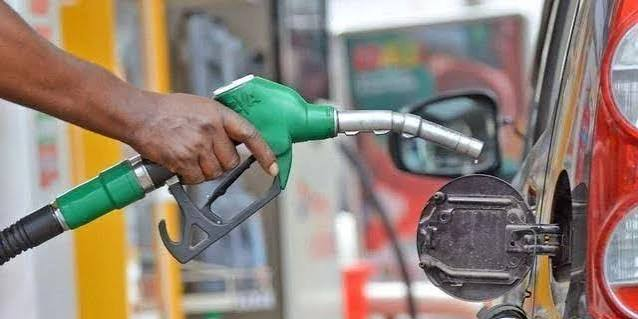
Many motorists in the Federal Capital Territory (FCT) say the N66-per-litre petrol discount did not make a significant impact, as it did not translate into cheaper transport fares.
Motorists and other stakeholders said they did not benefit due to network issues and their inability to download the NNPC app.

Reports said only motorists with the app could purchase the discounted petrol.
The Federal Government announced a 30-day discount on Oct. 31, sold through Nigerian National Petroleum Company Ltd. (NNPCL) retail outlets.
Mr Taiwo Oyedele, the Minister of Finance and Coordinating Minister of the Economy, said the arrangement was not a return to petrol subsidy.
Oyedele had assured that public transport operators would receive priority under the intervention.
However, some motorists who spoke on Wednesday in Abuja commended the initiative, while others expressed reservations about its impact.
Mr Kingsley Okachi, who resides in Jabi, commended the Federal Government for the discount.
Okachi said that he purchased petrol through the app but sometimes had to wait in long queues before accessing the product.
Mr Abdulrahim Malik said that many Nigerians were unable to benefit from the discount due to network challenges.
“I downloaded the app and followed the procedure before buying petrol at N1,339 per litre,” he said.
Mr Chike Agwu, who resides at Dei-Dei, said the intervention had not translated into lower transport fares.
Agwu said the intervention had failed to ease the burden of high transportation costs on Nigerians.
He said that commuters were still struggling to afford daily transportation to work.
“The transportation fare keeps increasing, and there has been no difference,” he said.
Mr Dele Babafemi, who resides in Bwari, said he couldn’t access the app and that commuters were still struggling to afford daily transportation to work.
“I did not benefit from the intervention, and I have not seen any positive impact, even among the transporters.
“Commuters continue to face difficulties accessing affordable transportation, with many stranded at bus stops due to high fares”, she said.
Mr Abubakar Yahaya of Dutse called for a comprehensive review of the intervention and the introduction of additional measures to ease the hardship Nigerians face.
Yahaya urged the government to explore alternative measures to reduce transportation costs and ease the economic burden on citizens.
He said economic hardship and transportation costs had forced workers to reduce the number of days they report to work.
Dr Aliyu Ilias, an economist and public analyst, said the initiative was cumbersome for commercial drivers and unlikely to provide lasting relief for commuters.
Ilias said he personally activated the app to understand how the scheme worked, but the implementation process was too complicated for the average taxi driver.
He urged the authorities to critically review the initiative, as the discount would only provide temporary relief.
He called for sustainable solutions that would guarantee long-term energy security in Nigeria.
According to him, greater attention should be given to Compressed Natural Gas (CNG) as an alternative fuel rather than relying on short-term interventions that may not produce meaningful results.
“The discount should translate into actual reductions in transport fares for commuters, but how will they monitor and enforce implementation.
“I wonder how commercial drivers will genuinely reduce fares following the discount.
“For instance, in a journey that previously cost ₦500, I don’t know if commuters will pay ₦400,” he said.
He said that without effective monitoring and enforcement, the initiative could become an exercise in public relations rather than a practical intervention that benefits ordinary Nigerians.
The expert said that reducing transportation costs was critical to lowering the cost of food and other essential commodities.
He said that cheaper transportation would make it easier and less expensive to move agricultural produce from farms to markets.
Ilias called on the government to prioritise sustainable energy policies and practical interventions that would reduce transportation costs, improve commuters’ conditions, and strengthen Nigeria’s energy security.
Another economist, Mr Gabriel Oyetola, urged the Federal Government to explore alternative measures to reduce transportation costs and the economic burden on citizens.