

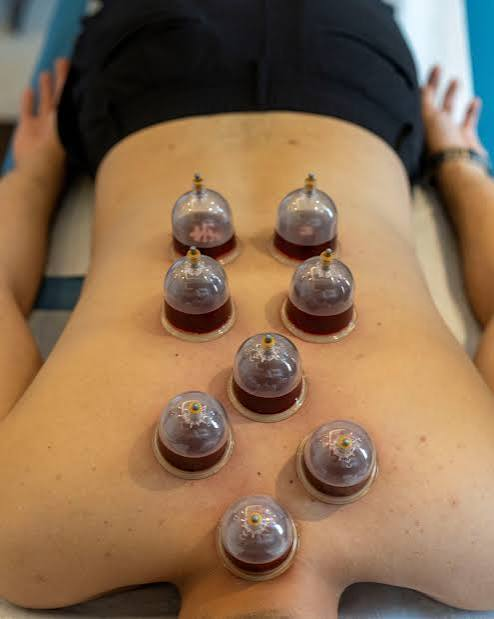
Some Kano residents still use traditional cupping therapy for medication despite the increasing number of modern healthcare facilities across the state.
An investigation revealed that, even within the Kano metropolis, some people prefer the traditional method to treat their ailments.

Chairman of the Traditional Cupping Therapy Association in Kano State, Alhaji Muhammad Nabango, said he spent over 50 years practising traditional cupping and still enjoys people’s patronage.
He said people visit him at his facility in Kano daily for the therapy, adding that they also visit clients at homes in their respective communities.
Nabango said practitioners used animals’ horns and small knives in the procedure, but some now use modern instruments.
Nabango said that he has more than 200 different types of horns that he uses in the procedure.
He encouraged younger practitioners to combine the inherited method with modern equipment to sustain the practice.
The leader, however, warned untrained people against performing the procedure, because performing the procedure needs adequate knowledge of the different layers of skin and proper technique to avoid complications and excessive bleeding.
“Practitioners should ask clients about their health conditions before carrying out the procedure and use a fresh razor blade on each client to reduce the risk of infection,” he advised.
Nabango said the rate of charges varies among practitioners, noting that the traditional method costs between N500 and N3,000, while modern centres charge about N18,000 for file opening, consultation, and treatment.
Malam Sule Kafinta, 67, a client from Gwarzo, said he had been undergoing cupping therapy for the past 16 years, after first trying it when he experienced chest pain.
He said he asks for the procedure whenever he experiences pain, particularly in his joints and back.
“During my first session, I was scared, but now the practitioner performs it while we discuss different issues,” he said.
Kafinta said he had never experienced any adverse reaction, and that some of his age mates also underwent the procedure.
Another resident of Gwarzo, Malam Buba Muhammad, said he was familiar with the practice because he often visited the place where it was performed. However, he had never undergone it himself.
Muhammad, who visits the place mainly for a haircut, said he heard people speaking positively about the therapy but remained hesitant.
“Perhaps one day I may try it, but I have never undergone the procedure, and I am not sure when I will do so,” he said.
Dr Ibrahim Muhammad of Gaya Emirate Specialist Hospital said cupping therapy is practised in different communities based on cultural and traditional beliefs.
He said people seek the procedure for back, shoulder, knee and muscle pains, migraine and sleeping difficulties, while some athletes, including boxers, also use it after strenuous activities.
The doctor said that cupping therapy is medically recognised as mainly temporary pain relief, and cautioned against presenting it as a cure for serious conditions such as diabetes, hypertension and cancer.
He advised pregnant women, people with insufficient blood or those requiring additional blood, and individuals whose bleeding took a long time or whose wounds heal slowly to avoid the procedure because of possible complications.
Muhammad also cautioned people living with diabetes, explaining that injuries to their skin could take longer to heal.
He discouraged home-based cupping, warning that poor hygiene and improperly cleaned instruments could expose people to infections, including hepatitis and HIV.
The doctor advised anyone wishing to undergo the procedure to consult a medical professional first and ensure it is performed by a properly trained practitioner who follows appropriate hygiene and equipment-safety standards.
An Islamic scholar in Kano, Sheikh Abdullahi Idris-Danfodio, said cupping, known in Arabic as “Hijama”, has a basis in Islam.
He cited a Hadith in which Prophet Muhammad (peace be upon him) identified honey, cupping and cauterisation as three forms of treatment, while discouraging his followers from using cauterisation.
Idris-Danfodio said the place of cupping and other remedies mentioned in prophetic traditions should not be ignored in discussions about Islamic medicine.