

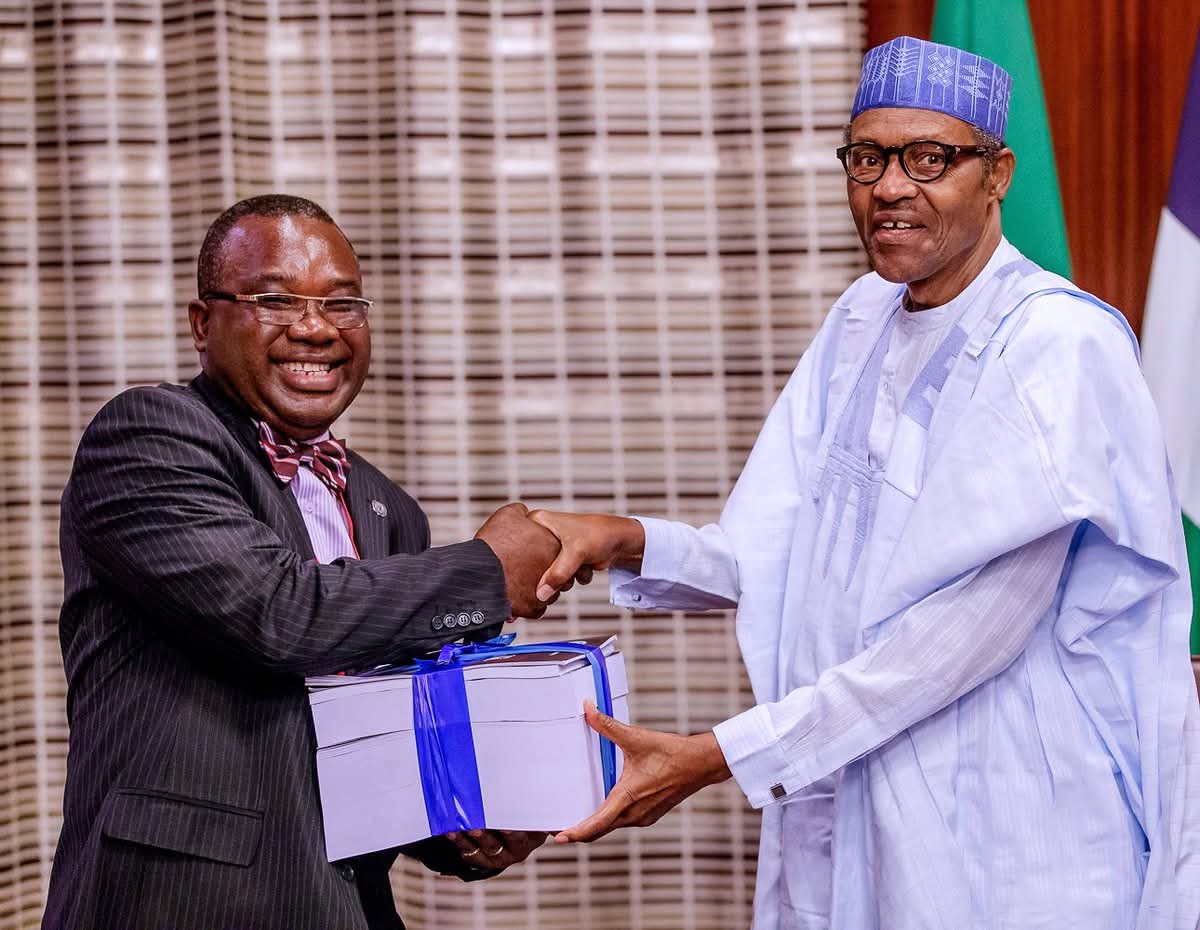
On 3rd June 2019, the Executive Secretary of the National Human Rights Commission (NHRC), Anthony Ojukwu, SAN, formally presented the report of the Presidential Panel on the Reform of the Special Anti-Robbery Squad (SARS), popularly known as the Tony Ojukwu Report on Police Reforms, to President Muhammadu Buhari at the State House, Abuja.

The panel had been constituted to investigate widespread complaints of human rights violations, abuse of power, and misconduct by the SARS unit of the Nigeria Police Force.Following extensive hearings and submissions from victims and stakeholders across the country, the panel made several far-reaching findings and recommendations to restructure policing and ensure accountability.
One of the key recommendations of the Tony Ojukwu Report is that, to address systemic problems within the policing system, the panel proposed a decentralised policing structure in Nigeria through the establishment of State and Local Government Police. To operationalise this framework, the report outlined the following key proposals:
1. National Consultation: A nationwide consultation should be convened to determine the modalities for the creation, organisation, functions, powers, command structure, control mechanisms, and funding of State and Local Government Police.
2. Legislative Framework: The Constitution should empower the National Assembly to enact laws establishing a national body, such as the National Police Council, responsible for the appointment of State Police Chiefs upon the recommendation of a State Police Advisory Committee comprising representatives of labour unions, the legal profession, transport unions, traditional rulers, religious bodies, and civil society organisations.
3. Inter-Agency Coordination: The National Police Council should define the circumstances under which the Nigeria Police Force (NPF) may assist State or Local Government Police, including situations where national interests require federal intervention.
4. Recruitment Standards: Recruitment, promotion, and deployment within State and Local Government Police should not be based on state indigeneship but rather on long-term residency of at least ten years and proficiency in a local language.
5. Limits on Use of Force: The Constitution should clearly define the jurisdiction and level of force that State and Local Government Police may possess, ensuring that such capacity remains below the operational threshold of the Nigeria Police Force.
6. Sustainable Funding: The enabling law should provide for first-line charge funding for State and Local Government Police to ensure financial independence and operational effectiveness.7. Protection of Critical Assets: State and Local Government Police should also be tasked with protecting forests, rivers, ponds, parks, and other critical environmental and community assets, alongside their general internal security responsibilities.
8. Detention Powers: These police structures may be restricted from operating long-term detention facilities.
9. Correctional Facilities: Where States establish their own police services, they may also establish correctional facilities, subject to minimum national standards prescribed by federal law.
10. National Oversight: To ensure coordination and uniformity, a national supervisory role should be vested in a body such as the National Police Council, which would oversee and harmonise the operations of State and Local Government Police.
Overall, the panel emphasised that a comprehensive national consultation would be necessary to clearly define jurisdictions, powers, and operational frameworks, thereby ensuring that Nigeria’s multi-level policing architecture functions effectively without conflicts, gaps, or overlaps, and aligns with international best practice.
On 17 March 2026, the above recommendations will be considered and promoted at the Birthday Anniversary Lecture in Honour of Human Rights and Development Lawyer, Frank Tietie, to be held in Abuja by human rights stakeholders including lawyers, academics, civil society leaders, journalists, etc in support for the recent efforts and resolve of the Federal Government of Nigeria to establish State Police in Nigeria.