


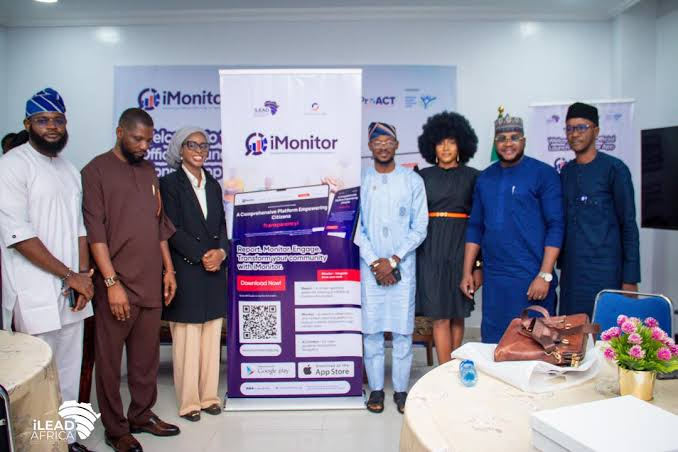
The Chief Executive Officer of iLEAD Africa, Mr Yusuff Laidi, has called for greater citizen participation in governance, policy formulation, and public accountability ahead of the 2027 general elections and beyond.
Laidi made the call on Thursday in Abuja, at the Citizens’ Agenda Summit 2026, with the theme, “Setting the Pace: Advancing Citizen-Led Action Ahead of 2027 and Beyond”.

iLEAD AFRICA is a leading civic-tech organisation that uses technology, data, and innovation to strengthen governance, empower citizens, and drive social impact across Africa.
He said that Nigeria was approaching another defining moment in its democratic journey, stressing the need to shift national conversations beyond electoral competition to what governments should deliver to citizens.
According to him, citizens must not be mere spectators in the democratic process, nor should their participation begin and end with casting ballots.
“Before political leaders present their agenda to citizens, citizens must have an agenda of their own.
“The summit is, therefore, designed to move us beyond conversations about who should govern to a more substantive discussion about what government should deliver.
“It is about placing citizens at the centre of our national development conversation.”
Laidi also said that while discussions ahead of the 2027 elections would understandably focus on political parties, candidates and their manifestos, equal attention must be given to citizens’ expectations and development priorities.
He stressed the need to ensure that such priorities translated into public policies, commitments and measurable actions.
He said that citizens must be empowered to set priorities, influence public discourse, engage decision-makers and hold institutions accountable for their commitments.
The iLEAD Africa chief executive officer said the organisation’s interventions were driven by the conviction that meaningful development required informed, empowered and actively engaged citizens.
He explained that through its programmes in youth development, democratic governance, digital advocacy and social accountability, the organisation had continued to explore.
According to him, this is based on how technology, civic participation and collective action can strengthen relationships between citizens and institutions.
The iLEAD boss said that the organisation had also undertaken broader consultations through its national consultation survey and engagements with local communities.
He said the initiative aimed to ensure that the perspectives, aspirations, concerns, and everyday experiences of ordinary Nigerians informed national development conversations.
He identified education, skills development, economic opportunities, healthcare, social protection, security, peace-building, infrastructure, community development and responsive local governance as critical areas requiring attention.
He also underscored the growing influence of technology and Artificial Intelligence (AI) in shaping democracy, the economy and society.
“While emerging technologies present significant opportunities, they also require responsible governance, inclusion, transparency and meaningful public participation,” he said.
Laidi called for practical measures to strengthen accountability beyond election periods and ensure that political commitments reflected the actual priorities of communities.
He also advocated building responsive institutions capable of listening to citizens, addressing their concerns and translating their expectations into sustained collective action.
“I would like to emphasise that the ‘Citizens’ Agenda Summit’ is not a platform for promoting a political party or any candidate.
“It is a platform for promoting citizen priorities, democratic participation, public accountability and inclusive national development. Our democracy must be bigger than electoral competition,” he said.
Laidi stressed that democratic progress must be reflected in the quality of public institutions, economic opportunities available to citizens, community security, and the extent to which citizens can influence public decisions.
He urged policymakers and development partners to strengthen collaboration and move toward coordinated, citizen-led interventions, calling on private-sector operators and innovators to develop solutions that address communities’ needs.
The iLEAD Africa boss also urged the media to continue to create platforms for informed public discourse and amplify issues affecting citizens.
Laidi further encouraged Nigerians to embrace active participation, collaboration and collective responsibility in shaping the country’s future.
“The 2027 election presents an important opportunity, but our responsibility as citizens extends far beyond election day.
“The real measure of democratic progress is not simply the ability to elect leaders, but the ability to continuously shape priorities, influence decisions and hold leaders accountable,” he said.
He urged participants to move beyond identifying problems to proposing solutions, expressing expectations to defining clear priorities, and engaging in dialogue to taking sustained action.
He emphasised that citizens’ priorities must inform public policies, while policies must shape public decisions and collective actions towards national development.
He commended government representatives, development partners, civil society stakeholders, volunteers and the organising team for their contributions towards the successful convening of the summit.