

Some economists have expressed mixed views on the Federal Government’s request for National Assembly approval of a N10.79 trillion loan to finance the 2026 budget deficit.
Mr Chris Nemedia, former Director of Research at the Central Bank of Nigeria (CBN), stated that reducing the cost of governance would free up funds for budget implementation.

“Our political leaders should reduce the cost of governance by adopting more modest lifestyles that reflect the country’s economic realities.
“This approach will free up funds for developmental projects and address other pressing needs of citizens,” Nemedia said.
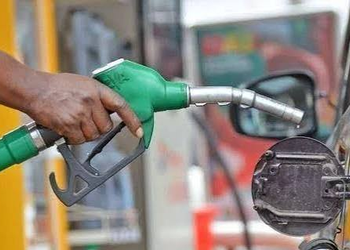
He stressed that the government should be innovative and utilise gains from the petroleum subsidy removal to bankroll the budget deficit.
“The government should allocate savings from the full removal of the petroleum subsidy to address project funding gaps and help ease the cost-of-living crisis,” Nemedia said.
Also, Mr Boniface Okezie, President of the Progressive Shareholders Association of Nigeria, stated that the government’s plan to secure loans is unnecessary. The government should instead use proceeds from increased oil earnings to fix the country’s infrastructure deficit. “Our country has seen rising revenues from crude oil exports since February 28, due to the Middle East crisis. crisis.
“The budget was benchmarked at $64 per barrel, while oil is currently selling for $99 in the global market,” Okezie said.
He added that the government should reduce its reliance on borrowing.
Meanwhile, Dr Muda Yusuf, Chief Executive Officer of the Centre for the Promotion of Private Enterprise (CPPE), acknowledged the government’s efforts to secure additional loans for infrastructure development. The country has a huge infrastructural gap, and like any country in the world, it is not out of place to borrow to support productivity and enhance growth, particularly infrastructure.
“What matters is having a strong governance framework to manage the loans and ensure they are used for the intended infrastructure projects
” There must be strict commitment to the projects and transparent earmarking of the loan amounts to earn greater legitimacy among the citizens,” Yusuf said.
He emphasised that not all budgeted projects can be implemented through Public-Private Partnerships in the country.
“Private sector investments require profitability, and not all infrastructure projects will generate profits, particularly in the short term.
“The government’s interests extend beyond profits to include social investments in healthcare, education, and addressing unemployment,” Yusuf said.
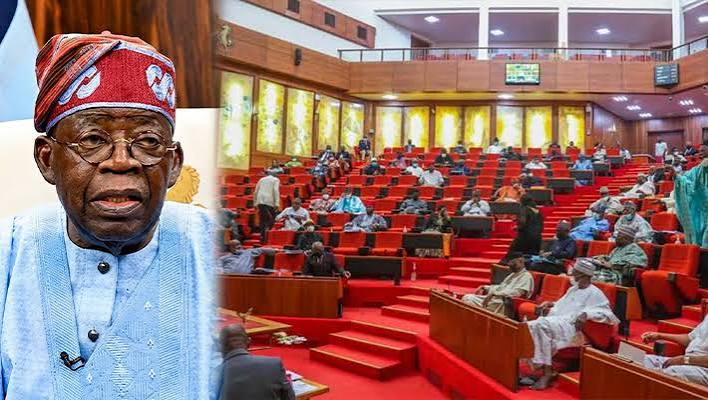
President Bola Tinubu has asked the House of Representatives to approve Nigeria’s N10.79 trillion ($7.7bn) external borrowing plan under the 2026 Appropriation Act to help finance the Federal Government’s budget deficit.
In a letter to the House of Representatives read by the Speaker, Mr Tajudeen Abbas, President Tinubu said that the request was made in line with Sections 21(1) and 27(1) of the Debt Management Office (DMO) Establishment Act 2003, which require the National Assembly to approve the terms and conditions of external loans.
The President explained that the proposed borrowing, valued at $7.707bn at the budget exchange rate of N1,400 to the dollar, formed part of the N29.218 trillion borrowing already provided for in the 2026 budget.
He said the approved borrowing was divided into N18.28 trillion in domestic loans and N10.79 trillion in external borrowing to finance the budget deficit.