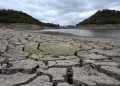


Residents in several Lagos communities report ongoing reliance on boreholes, wells, and water vendors, as public water supply remains insufficient despite government investments and interventions.

Residents of Mafoluku, Oshodi, Ikorodu, Ajao Estate, and Ikosi told the News Agency of Nigeria (NAN) that unreliable public water supply has forced them to seek alternatives.
Mrs Calista, a Church Street resident in Mafoluku, Oshodi, stated she has lived in the area for nearly 40 years without reliable public water supply.
She noted her household depends on boreholes and water vendors for daily needs.
“It is concerning that a major city like Lagos cannot provide water for its residents,” she said.
Calista explained that residents pay N100 for a keg of borehole water, but spend N250 or more on vendor water during extended power outages.
According to her, electricity interruptions often disrupted borehole operations, leaving residents with little choice but to buy water at higher prices.
Similarly, Mr Larry Owolabi, a resident of Ikorodu, said his household relies on a compound well, which often produces insufficient water during the dry season.
“Water and electricity are necessities for comfort, but I have never experienced that comfort in Lagos,” he said.
Owolabi appealed to the government to provide reliable public water supply and improve living conditions.
In Ajao Estate, Ms Abosede Ayola said she was born in Lagos but has never seen government water connected to homes in her community.
She stated that residents rely on public boreholes and pay to fetch water for domestic use.
“Life would be easier if we could get water from the state water corporation,” she said.v She has lived in Ajao Estate for more than 15 years, and said her household spent N4,000 every two weeks on sachet water.
She added that residents also contribute monthly to electricity costs for boreholes supplying their flats.
“I have lived in this area for over 15 years and have never seen any public water,” she said.
Anyanwu noted that residents continue to spend money on basic amenities the government should provide.
“The situation is difficult, and we are still budgeting for basic amenities that the government should provide,” she said. Ezeokoli, who lives in the Ikosi axis, said the government’s public water supply stopped working in his area in 2013 without any explanation.
Ezeokoli Ezeokoli said he now relies on vendors and boreholes for daily water needs. Residents’ experiences highlight the financial burden households face when public water is unavailable or unreliable.
The Lagos Water Corporation (LWC) had, in a recent interview with NAN, admitted to producing an average of 7.21 million gallons daily in 2025, against the state’s estimated demand of 540 million gallons daily.
The shortThis shortfall has raised concerns about the effectiveness of government spending and development partner interventions in improving access to safe, reliable, and affordable water.’s 2025 production records showed annual output of approximately 2,633.22 million gallons, averaging 7.21 million gallons daily.ion’s installed production capacity is approximately 210 million gallons daily, compared with estimated demand of 540 million gallons across Lagos.
In 2025, the Lagos State Government allocated approximately N37.49 billion to two major water infrastructure programmes.
The programmes included N16.86 billion to improve 15 existing mini and micro waterworks and N20.62 billion for Adiyan Phase II waterworks.
Adiyan Phase II is designed to add 70 million gallons daily to the state’s water production capacity.
For 2026, the state budget provided N4.92 billion for improving existing mini and micro waterworks and N26.02 billion for Adiyan Phase II.
The first-quarter 2026 budget implementation report recorded approximately N1.03 billion in expenditure on mini and micro waterworks, representing 21 per cent of the programme’s annual allocation.
By June 30, cumulative expenditure on the programme had reached approximately N1.78 billion, representing 36.2 per cent of its annual allocation.
The second-quarter 2026 budget implementation report also recorded approximately N1.04 billion in expenditure on Adiyan Phase II, representing four per cent of its annual allocation. The expenditure figures reflect amounts recorded against project budgets but do not indicate completion status or additional water supplied.d.
In an earlier interview with NAN, LWC said its network served 34,424 registered households, representing an estimated 1.03 per cent of Lagos’ population of 20 million.NAN’s Deputy Director, Corporate Affairs and Brand Management, Mr Rasaq Anifowoshe, disclosed this in an exclusive interview with NAN.
Anifowoshe said the figure was based on an estimated average household size of six persons.
“Using an estimated average household size of six persons, the number of residents associated with these connections is 206,444, equivalent to approximately 1.03 per cent of the state’s estimated population of 20 million,” he said.
He also said the corporation had an installed water production capacity of about 210 million gallons daily.
The LWC later clarified that its 34,424 registered connections were plot-based, and each connection could serve multiple households.
The corporation estimated that the connections served approximately 1.65 million residents, representing about 8.3 per cent of Lagos’ estimated population of more than 20 million.
The LWC, however, acknowledged in the revised coverage estimate that production remained far below the installed capacity of its facilities, attributing the shortfall to diverse challenges.
“Lagos State’s installed water production capacity has the potential to serve a substantially larger proportion of the population.
“However, ageing infrastructure, power supply constraints and ongoing rehabilitation works continue to affect operational performance and the reliability of supply in some areas.
“We acknowledge that significant challenges remain in meeting the growing demand for water across Lagos State. Population growth and urban expansion require sustained investment in water production facilities, distribution infrastructure, operational efficiency and long-term planning.
“Our focus is on strengthening infrastructure, improving operational performance and expanding access to reliable and sustainable water services for residents across the state,” the statement said.
However, the estimate does not confirm whether all counted residents receive a continuous and reliable water supply.
Beyond government funding, WaterAid Nigeria has partnered with the LWC to rehabilitate water infrastructure and improve access to potable water in underserved communities.
According to WaterAid, its partnership with the corporation on urban water supply began in 2023 with the rehabilitation of the Akilo water scheme in Ifako-Ijaiye.
The project, undertaken with Armani Beauty’s Aqua for Life initiative, was designed to provide safe water access to about 100,000 residents through household connections and water kiosks.
The Akilo facility was recommissioned in December 2025 after rehabilitation work on boreholes, electromechanical equipment, and distribution infrastructure.
The partnership has since expanded to the Ojokoro waterworks rehabilitation project under the TeamWater Nigeria initiative.
In March 2026, WaterAid Nigeria and the Lagos State Government unveiled a five-year, 2.5-million-dollar project to rehabilitate the Ojokoro waterworks and expand the Iju-Adiyan pipeline network.
The project is expected to improve access to potable water in Ojokoro and surrounding communities.
On Sept. 4, the LWC signed a contract with Bayroyal International Ltd. to rehabilitate the Ojokoro Mini Waterworks.
The project includes civil, mechanical and electrical upgrades, borehole rehabilitation, solar integration, pressure monitoring, leakage detection, metering and distribution network expansion.
WaterAid stated that the interventions aim to improve the reliability and sustainability of urban water supply.
However, these partnerships have drawn criticism from civil society organisations regarding the proposed involvement of private operators in public water facilities.
Mr Philip Jakpor, Executive Director of Renevlyn Development Initiative, told NAN that privatisation would not resolve Lagos’ water challenges.
He argued that this approach could prioritise profits over residents’ right to water and expose the state to unfavourable contractual obligations and debts.
Jakpor said opening the water sector to profit-driven entities has not improved access to clean, uninterrupted water supply.
He urged the government to reconsider its approach and explore alternatives that prioritise public welfare, operational efficiency, and reliable service delivery. Jakpor proposed the Public-Public Partnership model, in which public water utilities share technical expertise, operational experience, and institutional knowledge to improve water supply.ply.
He said the model had been tested in some parts of the world, where successful public utilities supported others in improving their operation. Jakpor maintained that the government should strengthen the efficiency and capacity of public water utilities rather than prioritise profit considerations in water management. For Calista, Owolabi, Ayola, Anyanwu, and Ezeokoli, the challenge remains securing enough water for their households without exceeding already limited budgets. Their experiences underscore the need for public investments and rehabilitation projects to deliver a reliable water supply to residents’ homes.